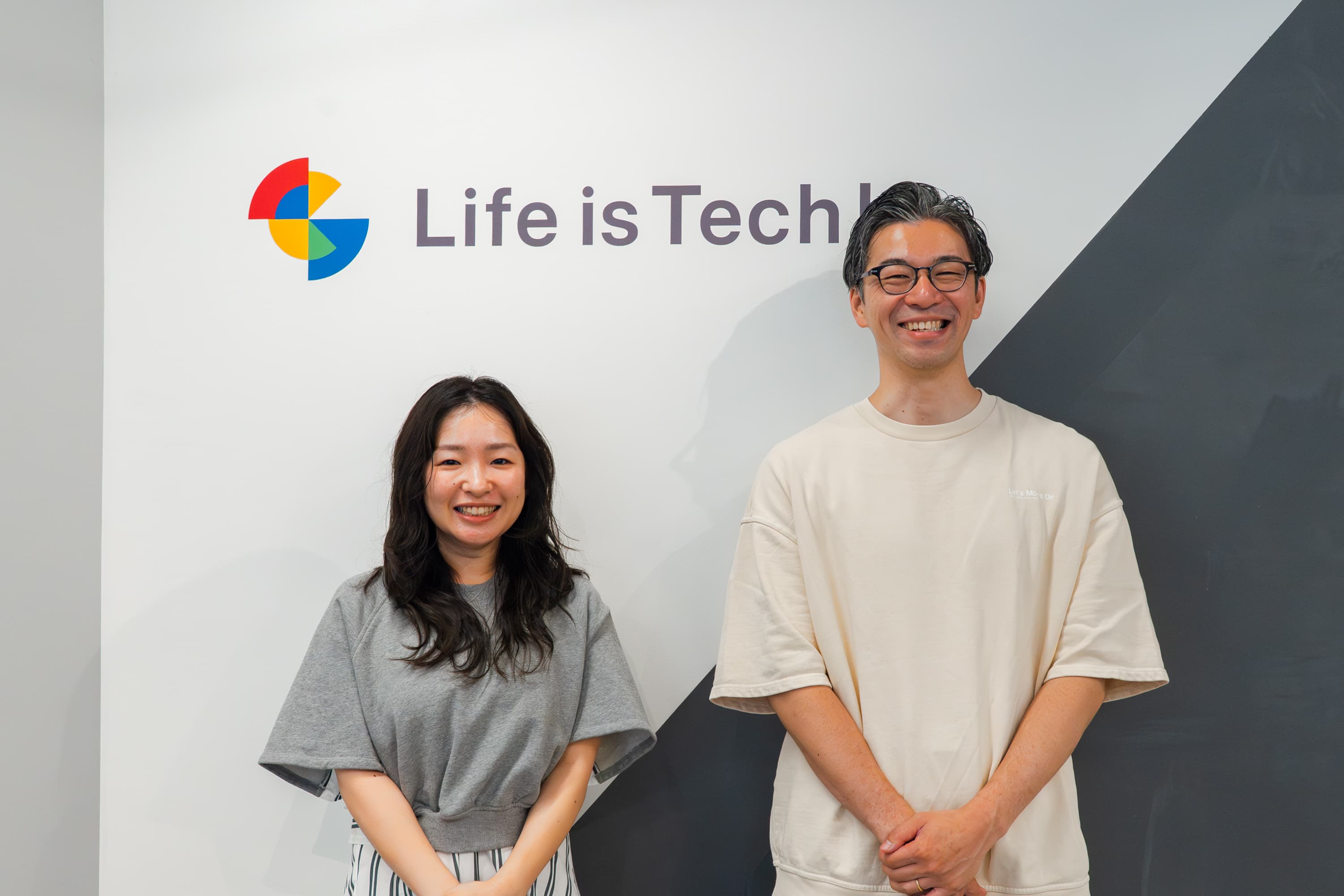
Programming and AI education for junior and senior high school students only works when it reaches both the child who learns and the parent who decides on enrollment and renewal. But at Life is Tech, email open rates were declining, LINE was limited to one-size-fits-all broadcasts with no segmentation, and the rich experiences delivered to kids weren't sufficiently visible to parents. After adopting Igness LAMP, personalized delivery linking Salesforce customer data with LINE lifted the repeat rate from summer camp to winter camp — and communication took hold so firmly that parents now reach out asking, "We haven't received this week's comment yet." We spoke with Mr. Onodera and Ms. Tanaka about the company's initiatives.
Highlights
- —Moving beyond a LINE account used only for one-way announcements
- —Segmented delivery powered by Salesforce customer data, with personalized messages timed to each experience
- —Making kids' experiences visible to parents, contributing to a higher repeat rate from summer camp to winter camp
About Life is Tech, Inc.
First, tell us about your business.
Onodera: Life is Tech provides programming and AI education for junior and senior high school students, under the mission of maximizing the potential of each and every teen.
We started with B2C programs for teens — the camps and schools my division runs today. We then expanded into a platform providing teaching materials to schools, and more recently into DX training for working adults. We've also launched a career-support platform for university students. Our business domains keep expanding, but the core remains the same: we want to build a society where teens can thrive with what they've learned.
Email open rates falling year after year — the limits of communication with LINE and Salesforce disconnected
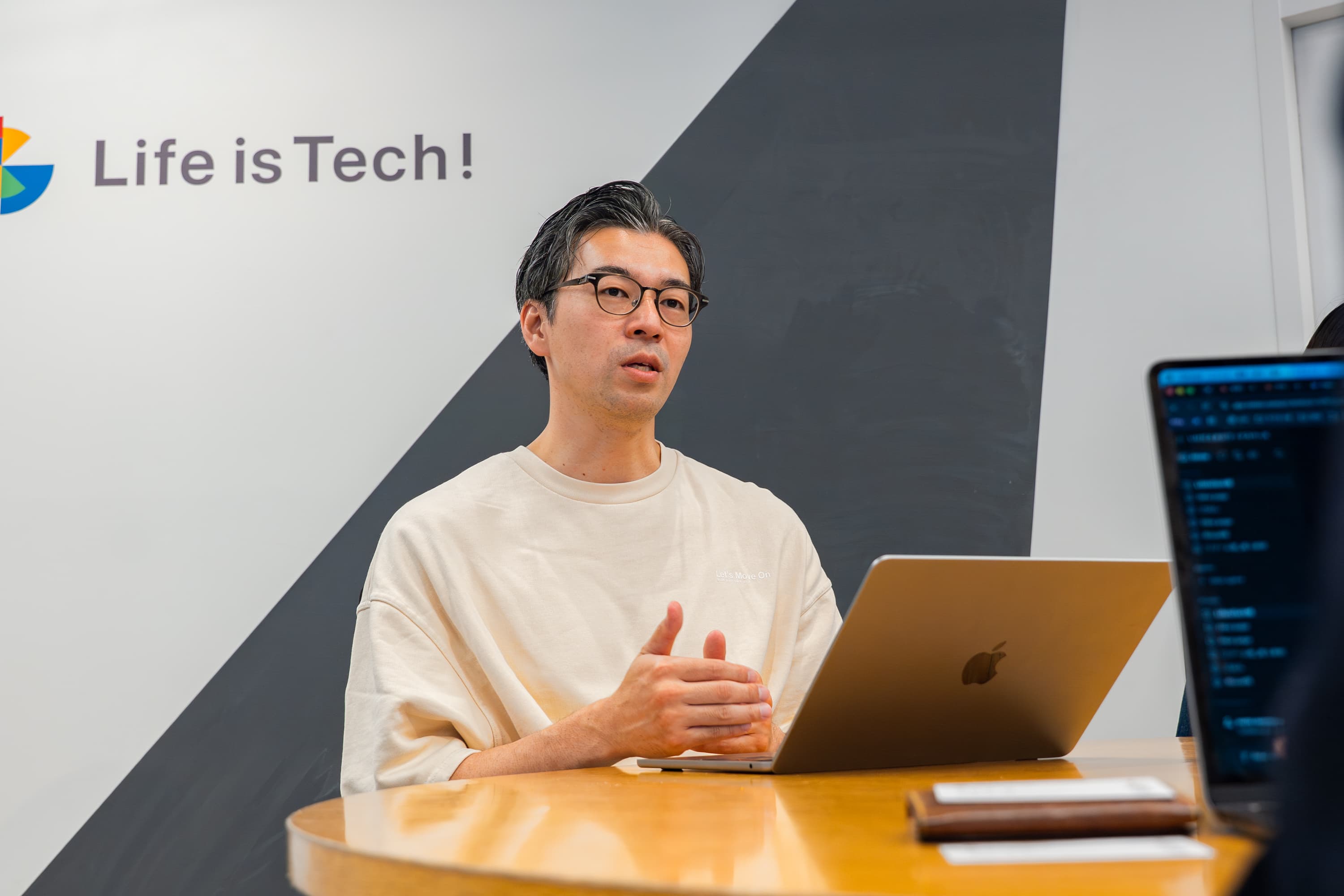
What challenges led you to adopt LAMP?
Onodera: In our B2C business, our main communication with customers under contract or those who had inquired was centered on email. We managed customers in Salesforce and communicated with them by email from there. Almost every touchpoint — guidance on camp and school applications, essential pre-event information, various announcements — went out via email.
But our delivery data showed open rates declining year after year, and we worried that the carefully crafted information we were sending wasn't fully reaching customers. We were exploring how to solve this when LAMP was introduced to us — the timing was just right.
Were you already using LINE at the time?
Onodera: We had our own LINE official account. But we weren't managing our friends list, and it had become a tool for little more than one-way announcements.
Meanwhile, even as email open rates fell, LINE's open rates held steady or even edged up. The channel's potential was clearly high. So we had a sense that rather than relying on email alone, we could do much more with LINE.
On top of that, LINE and Salesforce weren't linked, so we couldn't manage LINE friends and customer data end to end — an operational problem. Even though customer information was accumulating in Salesforce, we couldn't leverage it when sending LINE messages. Conversely, we couldn't see on the Salesforce side what was happening on LINE. Channel and data were completely disconnected.
Using LAMP to solve the post-camp follow-up challenge
How did you proceed with adopting LAMP?
Onodera: We first looked at using LAMP for post-camp follow-up.
Camps are short, intensive programming programs for teens held during summer and other long school holidays, run in parallel at multiple venues.
Communication up to camp registration was already careful and thorough, and after sign-up we properly provided everything families needed before arriving at camp. But follow-up after the camp experience was something we had never quite managed to do.
And any follow-up would only be meaningful if it was tied to the experience each individual customer actually had. The communication with the kids and the content of the experience differ a little at each venue, so being able to tell parents "here's what happened" accordingly would build post-experience loyalty and trust.
But we went a long time without finding a way to make that happen.
So that was the first challenge you tackled.
Onodera: That's right. I felt the most important thing was to actually run it and judge by the results, so when we consulted them, they proposed a way to get started — and post-camp follow-up became our first theme.
Delivering personalized information to parents matched to each venue and each customer's experience — communication we had given up on for lack of a means was achievable with LAMP. Being able to confirm that while actually running it was the decisive factor in moving ahead.
Delivery design aligned with the timing of the camp experience
How are you using LAMP today?
Tanaka: Broadly in two ways. The first is communication built around camps. Previously we would send one bundled email: "Thank you for coming — here's the survey, here are the photos." Now, with LAMP, we split the delivery by timing: about ten days before camp starts, the day before, day one, and the final day.
The camp experience has waves of emotional intensity by design — day one is that excited, slightly nervous high, and the final day is "that was the best!" Rather than sending everything at once, delivering at the right moments has raised open rates, and we really feel the substance is getting through.
The second is our after-school schools. After every class, mentors — the university students who teach — write growth comments, and we now send them to parents via LINE right after school ends.
Onodera: Growth comments used to be posted to My Page for parents to go check. Emailing every My Page update would itself have been too much noise — which is exactly why we hadn't been sending them. Switching to LAMP means growth comments now arrive directly on LINE, and parents can see what their child received in a single action. A service that used to wait passively is now delivered proactively, by push.
Tanaka: There are also newsletter-style broadcasts. Announcements like "deadline is coming up" used to reach people who had already applied, and just got ignored as irrelevant. Now we segment into "already enrolled in school" and "not yet enrolled," so the right information reaches the right people.
Cutting workload with recurring broadcasts driven by standard reports
Are there features you use particularly often?
Tanaka: Because it's integrated with Salesforce, we heavily use dynamic report filtering and the scheduled recurring delivery feature.
Actually, we struggled a lot when first building the mechanisms for sending weekly growth comments, or sending parents the comments mentors wrote to the kids on the camp's final day. The feature didn't exist back then, and I wasn't that deep into Salesforce myself, so I didn't know how to make it work and consulted Igness many times. I even built Flows myself, only to have them stop because the volume was too large.
Then the recurring delivery feature was released, and it has been a huge help. Since Salesforce reports are dynamic, messages now go out automatically every day to whoever matches.
The experiences we deliver to kids can now reach their parents, too
What's the biggest change you've felt since adoption?
Onodera: The biggest is that the good experiences we deliver to the kids can now also be conveyed to their parents.
Honestly, we had a business problem: our service design was already rich with carefully produced information, but parents couldn't see it. Using LAMP has let us start closing the gap between the experience delivered to kids and what parents get to see.
Tanaka: I really feel it.
Onodera: And it's showing up in our business KPIs. For example, the share of summer camp participants who repeat at our Christmas camp went up. Summer camp attendance itself had grown year over year, so all else equal you'd expect the repeat rate to hold flat or dip — yet it rose. I think that's the result of delivering what matters to each customer after camp.
In summer especially, on the camp's final day we deliver a personal message from the university mentor in charge of each child. That was information exchanged between mentors and kids that rarely reached parents. With LAMP delivering it to parents as an individual message as well, for a service aimed at minors — where both the child and the parent make the decision — we can now give both of them information that genuinely makes them want to come back.
"We haven't received this week's comment" — parents' expectations made visible
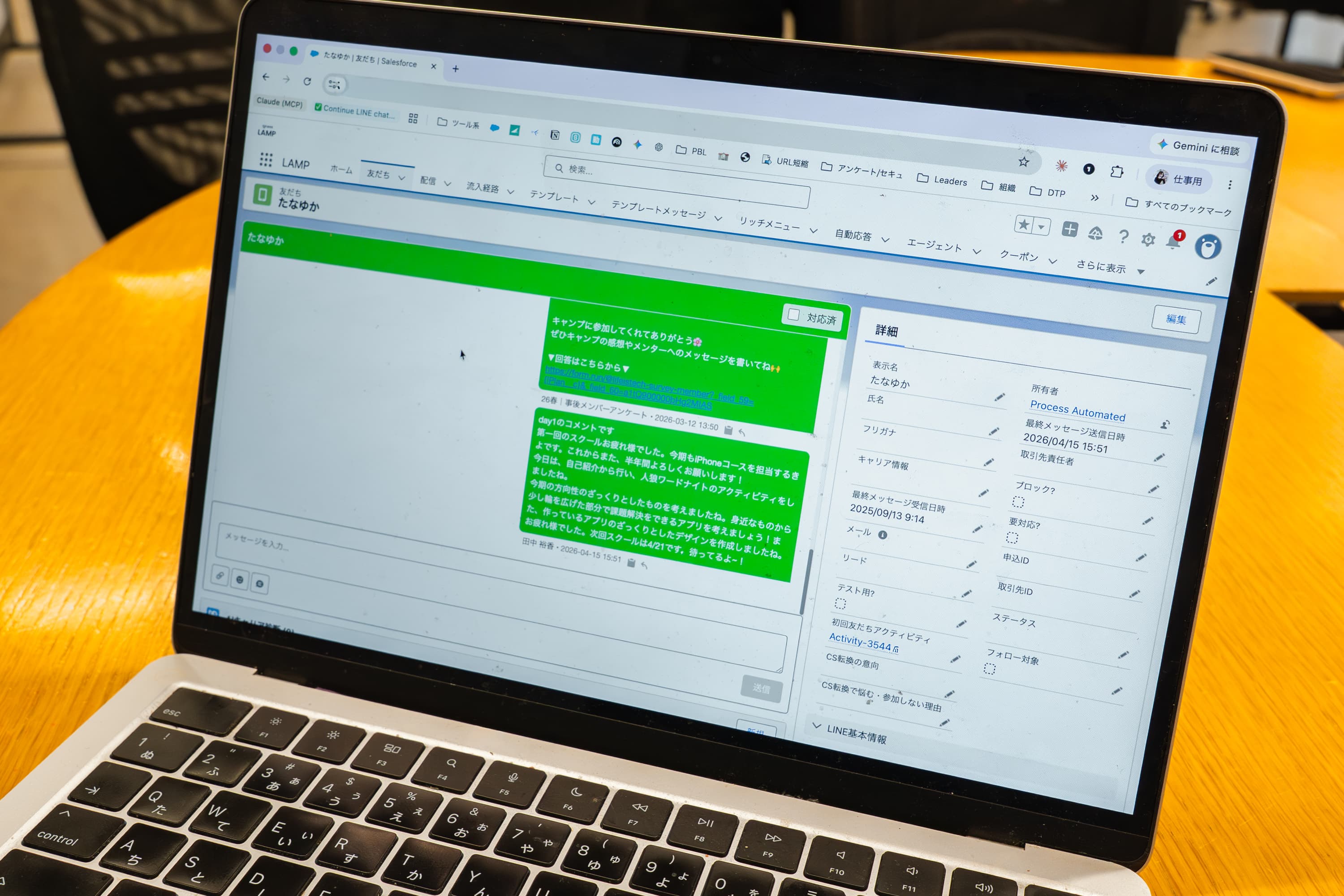
A growth comment delivered via LINE (sample)
Has there been a change in qualitative reactions from customers?
Onodera: Rather than direct comments like "this has gotten better," what's most telling is that inquiries like "we haven't received this week's comment" have started coming in.
It's a phenomenon that only happens because parents are looking forward to it — receiving these messages has become the norm.
Tanaka: It feels like their expectations have become visible. When we invited families to link their LINE accounts, far more did than we expected. It reconfirmed, from this qualitative side too, just how high parents' expectations are for information about their child's growth.
Next up: using LINE for new customer acquisition
What do you want to tackle next with LAMP?
Onodera: Right now our usage focuses on strengthening customer support and raising repeat rates for existing customers, but we'd like to use it more for acquiring new customers as well.
Specifically, the online information sessions that sit just before camp sign-ups. Follow-up with attendees is currently done by phone and similar means. If we add a path to LINE registration there and build the connection, customers can casually resolve small concerns over LINE without the effort of a phone call. We think that would ultimately lift application rates too.
If you're on Salesforce, just try it
Finally, a word for companies considering adoption.
Tanaka: For companies using Salesforce as their main data management platform, it's a very easy tool to work with. You keep using your existing Salesforce capabilities as-is, and because the data is connected, you can deliver the information your customers truly need over LINE.
Onodera: My sense is that raising the linkage rate between LINE and your own customer database directly translates into repeat business and higher LTV. Over roughly a year of use, that conviction has only grown. I hope you'll give it a try.
This article is based on interviews conducted in June 2026.
More about our products